An act of restoration
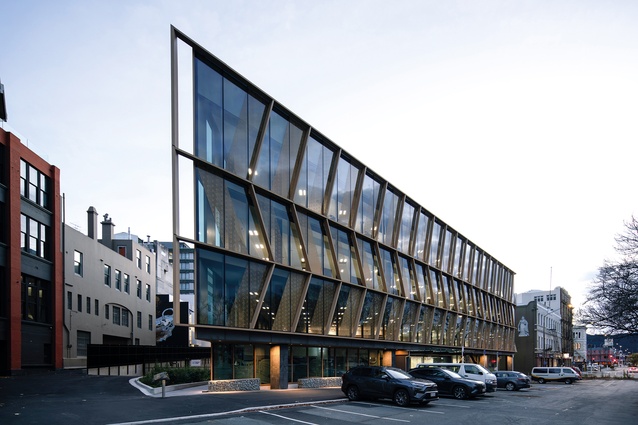
The dynamic interplay of light and form at dusk.
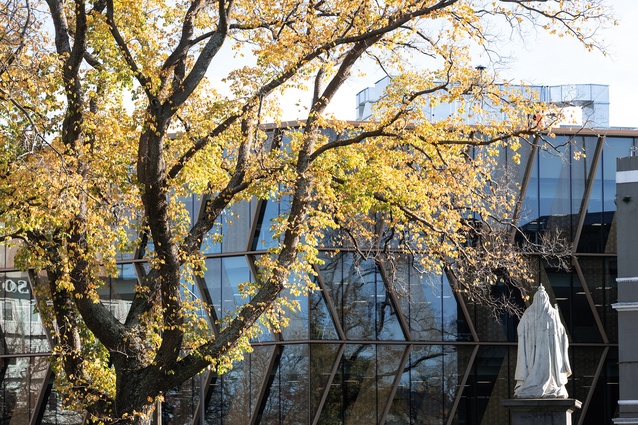
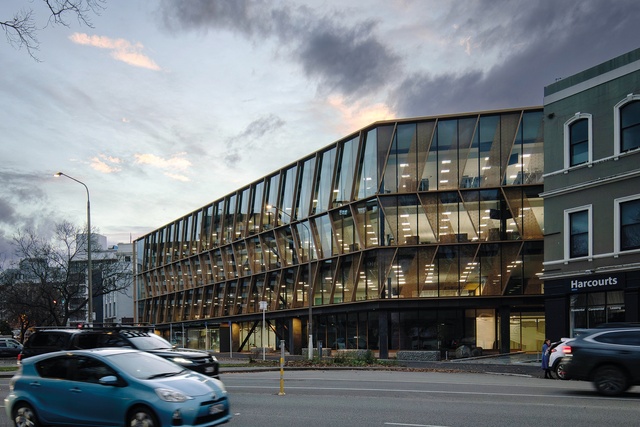
The façade’s articulated surface captures seasonal transitions, with its colour, geometry and materiality reflecting the play of dappled light across the elevation.
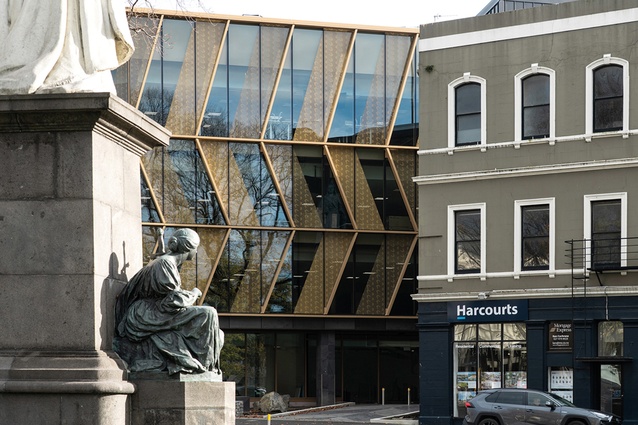
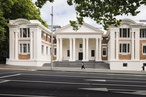
Spatial dialogue is evident between the Queen Victoria memorial, Cromwell Chambers and the new Ōtepoti building.
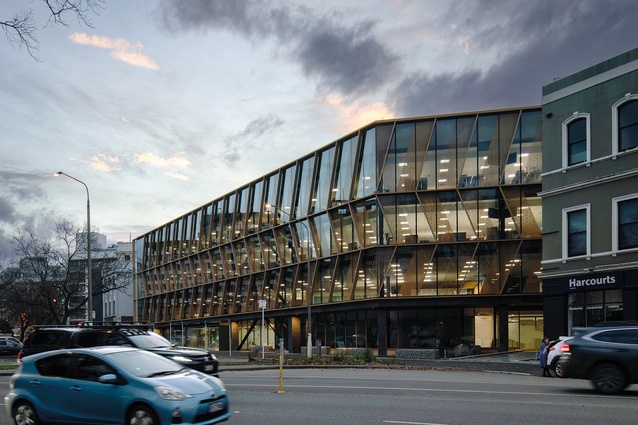
Re-establishing a defined urban edge along Queen’s Gardens creates a strong visual and physical connection to the public realm.
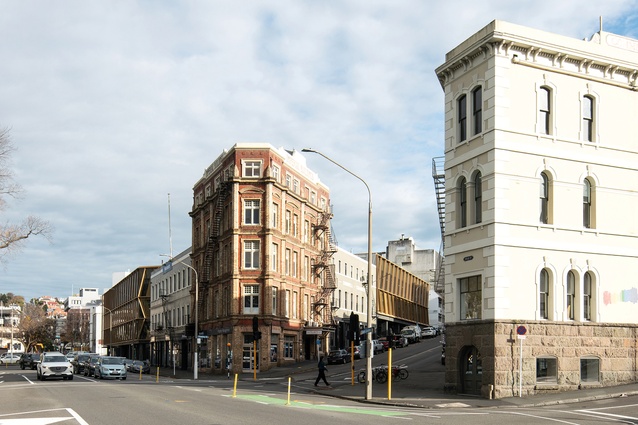
The building is integrated with the surrounding historic built fabric within the Moray Place–Dowling Street heritage precinct.
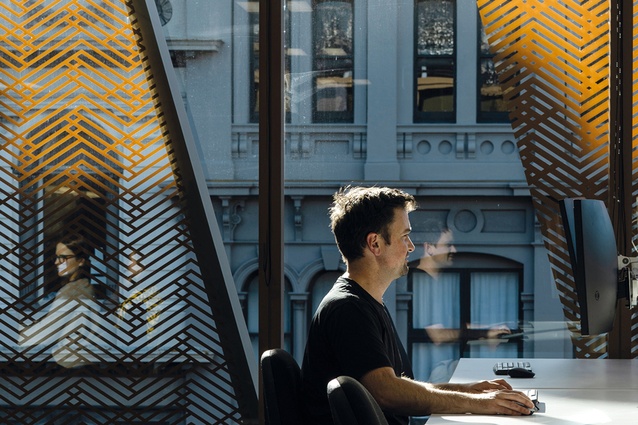
A layered composition of golden aluminium fins, paired with the woven frit pattern, creates a dynamic interplay between contemporary detailing and the surrounding heritage fabric.
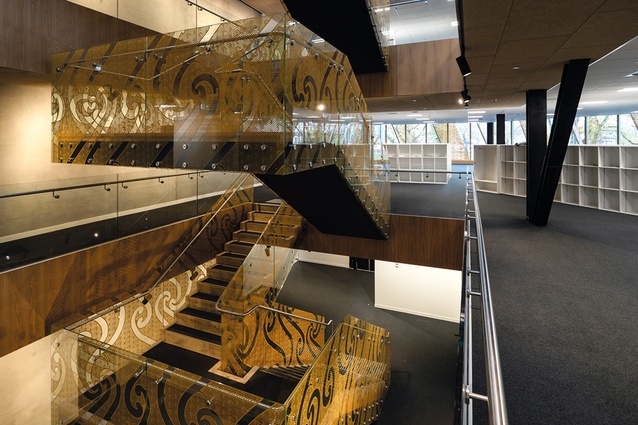
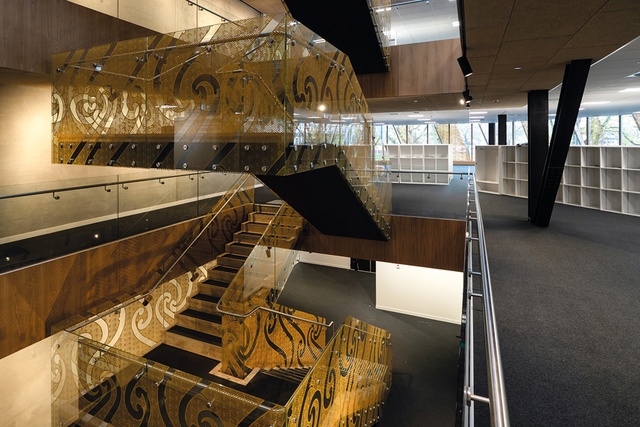
The central mass timber stair acts as a vertical connector, introducing natural light to lower levels while reducing the building’s embodied carbon.
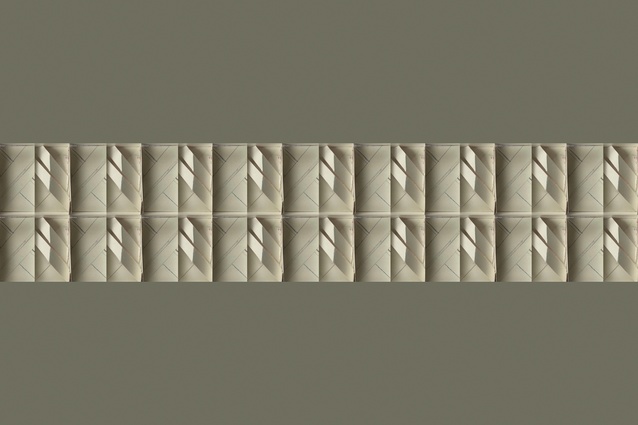
Kirsten Parkinson’s design development.
Andrea Bell visits ACC’s new flagship building in Ōtepoti Dunedin, designed by Warren and Mahoney in collaboration with Aukaha, and finds a weaving together of cultural narratives, built heritage and sustainability.
The Ōtepoti building represents a significant shift in heritage interpretation — one that acknowledges both mana whenua and colonial influences. Through a collaborative design process, the development seeks to restore some cultural balance and embeds historical narratives that have long been absent from this part of the city’s built environment.
Developed as a joint venture between Ngāi Tahu Property and ACC Investments, the building serves as ACC’s local branch while primarily accommodating staff members who support national operations.
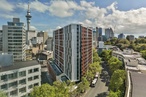
The building is located behind a small triangular section of Queen’s Gardens, near the northern lanes of State Highway 1, a short walk from the Octagon. It is screened by mature deciduous trees and was previously an unsealed car park, sloping upward from Queen’s Gardens on the south-east to Dowling Street on the north-east.
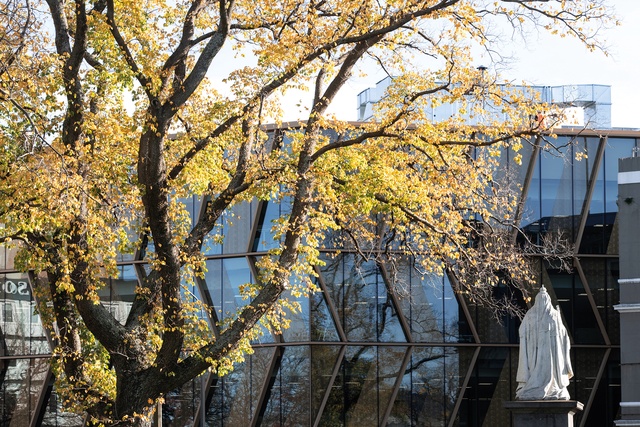
Queen’s Gardens serves as a ceremonial and commemorative space, featuring memorials to Queen Victoria and Donald M Stuart (one of Dunedin city’s founding fathers), and a marble cenotaph remembering those lost in war. The gardens also provide an area for relaxation for local residents and workers.
Situated within the Moray Place–Dowling Street commercial heritage precinct, the site was originally part of the Ōtākou Habour foreshore known as Ōtepoti. This was a place where Kāi Tahu ancestors landed their waka before continuing inland to gather food and resources.1
The place name Ōtepoti has been adopted as the te reo Māori name for the city of Dunedin but, contrary to common belief, Ōtepoti does not mean ‘place of boats’. The name refers to the harbour’s distinctive corner shape, resembling a poti — a flax basket —used for carrying food.2 This interpretation became a central cultural narrative for the building’s design. “Our mana whenua design response for this building is grounded in the renewal of the story of the place name Ōtepoti.”3
The precinct is rich in historic architecture. Notable structures once occupying the site include:
- Original First Church, constructed in 1848 and burnt to the ground in 1865.
- Interim First Church, constructed in 1864 facing Dowling Street. A majestic wooden building of simple Grecian form and two storeys, it was a notable landmark of Dunedin’s foreshore and was relocated in 1878.
- Sargood building, constructed in 1874, fronting Queen’s Gardens.
- Freethought Lyceum (Sunday School), constructed in 1888. A two-storey grand design, it became the City Hall and then the venue of the Alhambra Theatre.
- Standard Insurance Building, with a three-storey ornate frontage onto High Street and a two-storey frontage on Dowling Street.4
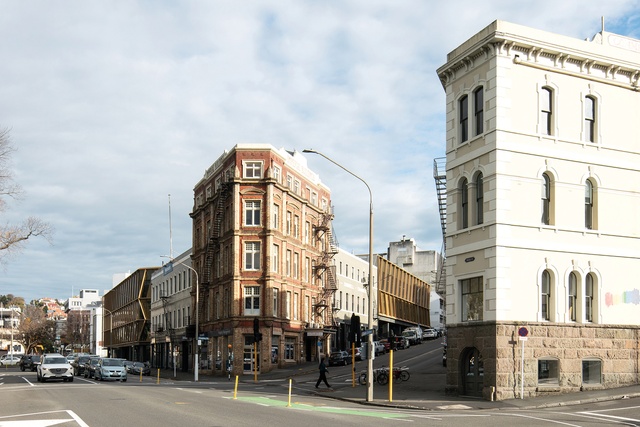
The streetscape included the Royal Exchange Hotel (1878–79) in lower High Street, now Queen’s Gardens, designed by RA Lawson. Next to it stood Sargood, Son and Ewen’s warehouse, designed by Reid and Barnes of Melbourne in 1874. These two buildings were demolished for carparking in the 1960s, leaving a gap in the city’s historic fabric. Cromwell Chambers, Donald Reid’s first warehouse, remains alongside the Imperial Building on the corner.5
Working closely with Dunedin City Council heritage advisors, the architects created a design that respects planning criteria for height, mass, street frontage and materiality, responding to and complementing the precinct’s character and adjacent heritage buildings. However, these contextual relationships and development criteria neither addressed nor acknowledged the cultural significance of this area to mana whenua as a place of arrival for ancestral Kāi Tahu. When starting the discussion with Dunedin City Council heritage advisors, the question posed by Aukaha was: “Whose heritage?”
“At its heart, the design for the Ōtepoti building is an act of heritage restoration. Missing from the built heritage of the Queen’s Gardens Precinct is an acknowledgement of the significance of the area to mana whenua and the role of local Māori in the settlement and development of present-day Dunedin/Ōtepoti.”6 This project aims to address that omission, embedding Kāi Tahu narratives into the architecture and landscape of the site and local area.
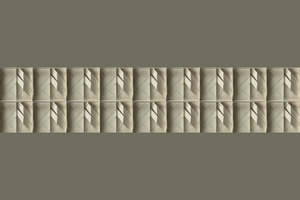
The design was shaped through the collaboration of architects from Warren and Mahoney, led by Tim Hervey, with the Kāi Tahu cultural design integration team at Aukaha — Mana Ahurea. Guided by mana whenua values and a cultural narrative written by Kāi Tahu scholar Dr Megan Pōtiki, Kāi Tahu artist and Mana Ahurea designer Kirsten Parkinson set about reflecting Kāi Tahu design in the design development of the building.
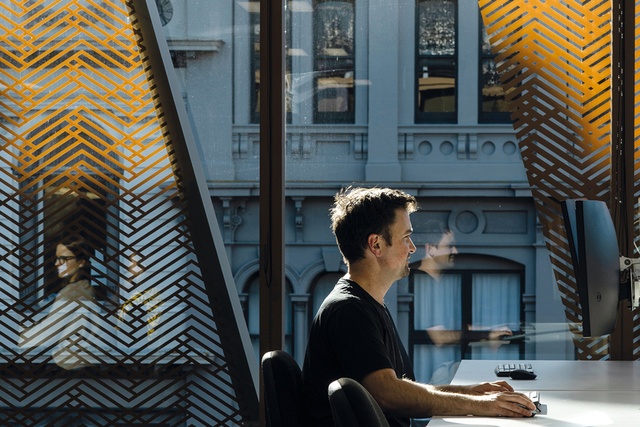
Inspired by the unique woven form of the poti/ basket reflecting the harbour’s original shape, Parkinson’s artwork informed the strong and dynamic language of the façade. This was expressed through diagonal aluminium fins and glass frit patterns to evoke the woven colour and texture of dried harakeke/ flax. The golden colour was selected by Parkinson to resemble the colour of aged harakeke and works beautifully with the dappled light of the deciduous trees in Queen’s Gardens and the evolving colour of the leaves through the changing seasons. The metallic hue reflects the surrounding context and is constantly changing with the light.
This symbolic gesture ties the building to the concept of noa — a safe, secure space for its purpose to house kaupapa tapu/sacred matters, like accident care and recuperation.7
Not only is the glass frit pattern rich in narrative meaning, the external artwork of the Ōtepoti building also has a functional purpose. Developed in conjunction with service engineers Cosgroves, the pattern was scaled and tested to see which version was most functional in optimising daylighting, shading and thermal gain, and reducing glare, while retaining natural light and views. External mullions and blinds also enhance solar shading to prevent overheating and improve occupancy comfort. This helps to reduce building energy demand and operational costs.
Beneath the façade, a recessed ground level uses glass, planting and stone to increase mauri/energy and reconnect the occupants with the natural world.8 Materials include Timaru bluestone cladding, a nod to the heritage of the area, river-stone gabions instead of bollards, and culturally significant species for raraka/weaving and rokoā/healing. The space honours the original Ōtākou shoreline through both form and planting, with the movement of the once-present shoreline being suggested in the puhoro patterning on the glass.
The main entrance is positioned at the eastern corner facing Queen’s Gardens, where the structure pulls back from neighbouring Cromwell Chambers to create a more sheltered forecourt. This entry is clearly and strongly marked with large-scale works by artist Ephraim Russell (Kāi Tahu, Ngāti Kahungunu, Rongomaiwahine, Rongowhakaata, Te Aitanga-a-Māhaki, Ngāi Tāmanuhiri, Rangitāne ki Tamaki Nuiā-Rua). These golden backlit pou whenua create a distinct threshold, referencing the handles of the poti, traditional lashings, symbolising unity and completion.
The primary entrance at the eastern corner is reserved for staff. Public access is deliberately understated; the visitor entry is positioned mid-way along the south-eastern frontage, integrated almost seamlessly into the façade. A recessed ramp guides visitors below street level, where the architectural language shifts to a restrained, functional front-of-house zone.
A typical floor-plate layout with central core and open-plan office space around the perimeter is elevated by a couple of key moves.
The building pulls back from the site boundary on the upper levels of the north-western side. This, combined with an adjacent laneway to the west, essentially gives the building three frontages and allows the interior to take advantage of natural light on 3.5 sides. This means that the 2.7m floor-to-ceiling height feels generous, especially when combined with the substantial circulation spaces provided through the open-plan office space.
You are constantly aware of, and drawn to, the edges of the building. The golden colour from the exterior façade is brought through onto the interior face of the external walls, linking the interior to the exterior. This, combined with the patterning of the glass and layering of the fins, gives a sense of an ever-changing external environment but a very calm and quiet internal environment.
A sense of openness and connection is reinforced by the use of a mass-timber central staircase, which filters natural light down through the levels of the building. For Kāi Tahu, this element embodies generative forces — Tupuānuku, Tāne Mahuta and Manu. Kāi Tahu artworks anchor entrances and circulation spaces around the stairway at every level. This connecting element between the levels of the building encourages occupant use, reducing the demand on mechanical lifts and promotes physical activity to improve well-being and socialisation.
The brief provided by ACC prioritised wellness and accessibility for its staff, aiming to set a benchmark beyond NZS 4121 standards. Key features include wide corridors on all levels, adjustable-height desks, accessible bathrooms and kitchens on every floor, office equipment positioned for easy reach and Braille on all signage.
End-of-trip facilities support and encourage cycling and well-being, with showers, lockers and 80 bike parks. Dedicated spaces for parents, quiet reflection and well-being provide additional support for staff. Gender-neutral facilities are also provided on every level. A key part of the building for the tenant is the social space on Level 1, which looks out to Queen’s Gardens and beyond. This space is used not only for staff but also for events.
The architects challenged the client’s brief for a cost-effective conventional steel, concrete and glass commercial office building by identifying and adopting a number of cost-neutral, low-carbon solutions that achieve a noticeable reduction in embodied carbon when compared against current benchmark office buildings. Low-carbon solutions include exposed mass timber stairs, timber internal framing, wood-wool ceilings, full timber trim, including all skirtings and handrails, and low-carbon certified internal finishes throughout.
The Ōtepoti building has achieved a market-leading 5-star NABERSNZ™ rating.9 Mechanical and hydraulic systems include hot-water heat pumps, a hydronic fan coil air-conditioning system to reduce refrigerant use, and heat-recovery ventilation to preheat incoming air. Energy modelling with IES software optimises loads and plant capacity, while a central BMS with sub-metering supports detailed monitoring in line with NABERSNZ standards. The warm roof design accommodates future solar panel installation to lower energy demand and operating costs further.
This redevelopment transforms the former large at-grade car park into a new urban edge for Queen’s Gardens, one which not only speaks to the area’s pre-European history but also respectively challenges and creates a dialogue with the surrounding and adjacent built heritage.
The Ōtepoti building is more than a commercial development — it is an act of heritage restoration. By weaving together cultural narratives, built heritage, sustainability and accessibility, the project honours both historical and living heritage, creating a space that reflects Ōtepoti Dunedin’s past while also shaping its future.
References
1, 2. Narrative excerpts for Ōtepoti, Aukaha.
3. Dr Megan Pōtiki.
4–6. Warren and Mahoney press kit, June 2025, p. 3.
7, 8. Narrative excerpts for Ōtepoti, Aukaha.
9. Commercial buildings account for 21 per cent of New Zealand’s electricity use, costing businesses approximately $800 million annually. NABERSNZ™ provides a benchmark for office energy efficiency.