On the move
We shifted the studio today. I say we but, in truth, I did bugger all of the heavy lifting, retreating to the comfort of my beloved Aalto armchair to observe the activity around me. It seemed chaotic but moved to a choreographed sequence that had been planned and critiqued over the preceding weeks.
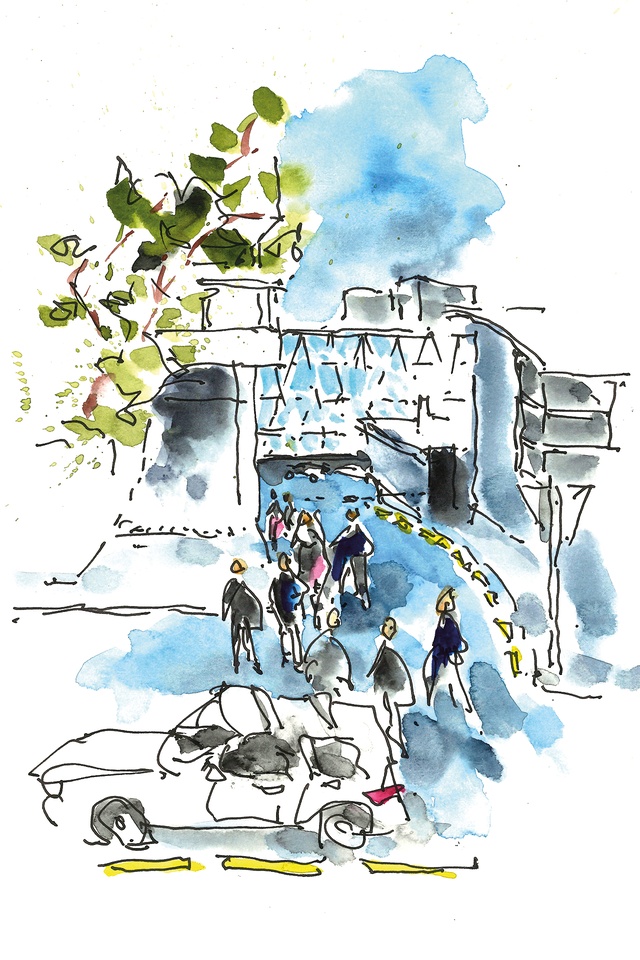
There was a quiet determination about the movements that reached their crescendo in the shrieking of cellotape sealing up cardboard boxes, then subsided as the boxes were stacked and the gang headed out across town to the new joint.
I was not quite alone as the truckers moved around me but the chair’s location by a column afforded a moment of calm. I reflected for a moment or two on the previous 20 or so years that the floor in an anonymous city-fringe building had been the practice’s home. My reverie was gently interrupted by a large, tattooed forearm that gripped an armrest in a way that made it clear it was time for me to move on and leave the way clear for the movers’ wagons and trolleys, which were rapidly emptying the space.
I had been late into the studio, thinking that a 9.00am start would give me plenty of time to pack my beat-up collection of pens, clutch pencils and scale rules, and to sort out how to move the stack of sketches that journal my career so far. I was beaten to it. Aiden, with whom I am working on a small-but-complicated project at present, had very carefully boxed everything up, and identified the contents and destination within our new space. And, just like that, the old space bore no more trace of me.
I am moving with a little trepidation. I have realised that, though I eschew the idea of a favourite chair, I am more a creature of habit than I like to admit. It takes quite a long time to feel sufficiently at home in a space for the work at hand to prevail over the distractions of, say, the movement of unfamiliar sunlight patterns, or the minutiae of one’s outlook. I have perched at a desk overlooking the elongated on-ramp that is lower Hobson Street through a screen of roadside trees for most of my time in our first-floor studio. I have watched the seasonal bursting of buds and fall of leaves, and the evening snarl of traffic inching its way to spaghetti junction.
It is, though, the familiarity of the seat, desk, monitor, the scattered papers, pens, and those things that I can’t find a home for, that have created a place for work. In my first days of computer modelling and rendering, when a knowledge of DOS was as necessary as was knowing how to create a texture map, it seemed that the space created between screen and eye was so all-encompassing, so demanding of one’s faculties, that we spoke of “going to the big room” when disengaging from modelling to talk to a fellow studio member. It was as if physical disengagement from the monitor was required in order to focus on the visitor, and to reassemble the power of speech.
I am pleased the process of pointing and clicking has eased the manipulation of pixels, but the dominance of that space between screen and eye remains. And so it is with pen and sketchbook. Yet, where the eye and hand are in a dance of discovery as one makes marks on the sheet, and delight in the tiny perturbations of an ink-charged stainless-steel nib across the tooth of the paper, the relationship with the manipulation of a cursor is more abstracted.
I can sit anywhere with sketchbook, diving into the page, oblivious to the discomforts of a rocky slope or damp grass, valuing, in fact, the haste to complete that a sharp, stony seat impels; drawing teacher Pat Hanly’s words ringing in my ears “don’t worry about the details, get into the big issues.” Assuming the position in front of the screen is an altogether different thing. It is a place of work and I am reminded of an interview with author Graham Greene who, when asked whether or not he ever had writer’s block, replied that he was at the typewriter by 8.30am and the muse knew to meet him there. This is not the magic of the eye and hand; this is a place of work.
At home I have a place of work. It is a desk on a mezzanine: a slab of oak with a low upstand, an open balustrade to one side, a view across the kitchen below to the rear garden and the neighbouring houses, a low, sloping, wood-lined ceiling overhead. I know I can work there. It was a place of productivity and focus within the soft dome of cedar-tinted lamplight during the long days of the Covid lockdowns. It is also a place that I avoid. It calls me to account and challenges my inclination to procrastination. I reluctantly ascend when excuses and distractions are exhausted: 13 risers, past the skylight and the bookshelves and a last look to the sitting room below. And then, a sudden wash of business-like focus as I sit, plug in the laptop, the desk lamp creating its umbrella of focus and productivity.
Unlike home’s quiet refuge, the city studio has been a place of discussion and negotiation: where projects are gestated and critiqued in gatherings around a monitor. It has also supported times of quiet focus, of the pressure of impending deadlines, of gathering for a morning talk, a shared lunch, and one of Adrian’s cocktails at the end of the week.
As the last cabled entrails were removed and the desks knocked down for transport across town, the memory of all those voices and all those projects fell silent, and I knew the studio was no longer here. A few lingering people gathered up a carload of paintings, and I drove them across town to join the others in the new studio.
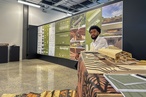
I arrived to a wonderful scene of coordinated chaos as builders and cabinet-makers scurried around, desks being constructed, lighting and the digital arteries installed and, in one corner, a temporary work desk occupied by Paul issuing urgently required project instructions. The empty shell at Hobson Street revealed the importance of occupation.
No matter how well the old space reflected our values and way of working, the studio’s assembly of our new home is affirming its ownership of the beautiful new space, preparing the ground for the breath of debate, discussion and shared work and, I hope, for Adrian’s cocktails. Some of those who have worked so hard transforming the space had hoped for a completed studio when we gather to bless the building at dawn on Monday, but I eagerly await unpacking and the restless making of a place to work as I get used to the unfamiliar patterns of sunlight across our new home.