Women reshaping Aotearoa’s spaces and design culture
This International Women’s Day, Te Kāhui Whaihanga New Zealand Institute of Architects invited two leading female architects to share their experiences in the profession. Their responses cast light on how much has changed, and why there’s growing momentum for women to not only join the profession, but make it a lifelong career. They also highlight how the shift towards diversity is influencing design approaches themselves.
Phaedra Applin, Head of Architecture at WSP, trained in the UK and has worked across Hong Kong, Malaysia and the Pacific before settling in Aotearoa. Her career spans the most visible shift in the profession. “When I qualified as an architect about 30 years ago, only 2 per cent of architects were women,” she says.
Te Kāhui Whaihanga The New Zealand Institute of Architects’ own membership data shows much has changed since then. By 2025, just over 42 per cent of members identified as women. While there’s still some distance to go to improve retention and career progression, Phaedra is positive about what she’s seeing.
What has changed, and why it matters

Phaedra was drawn to a career in architecture from the start. “I’ve always wanted to be an architect. It combines something creative with something very practical. It’s a way to influence the built environment and the world we live in,” she says.
However, she describes her early career in architecture as defined by long, unsociable hours and work patterns that were treated as non-negotiable. In her view, the biggest change has been flexibility and the normalisation of different working arrangements. Career breaks are now more accepted. Flexible schedules are more common. Technology enables people to step away from work to fulfil their other day-to-day life obligations and log back in later. Phaedra has also seen a shift in expectations around caregiving, with more men taking parental leave and childcare being shared. For the profession, it is a practical evolution, and it benefits everyone.
Construction culture has shifted too. Phaedra remembers building sites as places that could feel intimidating, even down to basics like gear that simply did not fit. “You couldn’t even get site boots in your size,” she says. More recently, she has been on projects where many women are present across contractor teams, transforming the environment from the work boots up.
This is something Charlotte Dunning, an emerging Architectural Graduate at Warren and Mahoney progressing towards registration, has seen from the start. Working in multi-residential design, her early career experience has been defined by supportive environments.
“I got a job as a personal assistant to a kitchen designer and manufacturer in Auckland, working myself up and becoming the design assistant, creating high-end residential cabinetry. That was really fantastic. But then I realised, not only did I want to design the kitchen, I wanted to design the whole house,” she says.
The mentorship she received from fellow women in the profession on graduation gave her the courage to keep going despite early fears, especially as someone who has struggled with dyslexia. Charlotte says accessible leadership, day-to-day peer support, and professional networks such as NZIA that help young practitioners build confidence and capability over time have made her experience of the profession an incredibly positive and inclusive one. In her view, those ecosystems matter because “architecture is not a solo sport” and collaboration within the industry is imperative for great outcomes.
This greater inclusiveness isn’t limited to architecture practices themselves, but has flowed through to the way the profession in New Zealand approaches design.
“I can definitely see that cultural awareness has really changed — people are really thinking about that now,” Phaedra says. “People notice what their own lives have taught them to notice, whether that is accessibility requirements within a family, or what makes a home workable across generations.”
She has seen accessibility and safety — not just in buildings, but in the spaces between them — move from discretionary parts of a design to core aspects. She believes this is where diverse perspectives have significantly influenced design policy and practice, as more people from different genders, backgrounds and experiences have entered the profession and shaped standard thinking. She points to the way consenting processes now demand stronger rigour around accessibility, and to the growing emphasis on safety-led planning and design.
Within her own team, she has encouraged training that increases the emphasis on safer environments, including CPTED approaches that put everyday safety into the design conversation earlier. This is not about designing for a single type of user, but about recognising that features that improve accessibility often improve the experience for everyone.
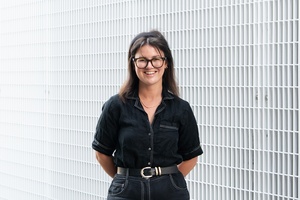
Charlotte’s perspective is grounded in the daily realities of multi-unit housing, where small decisions have a big impact on liveability and outcomes. It starts with the simplest question: who is this building actually for? “It’s less of an abstract concept and more of a day-to-day operational one. For example, where is someone going to park the pram?” she says.
In high-density housing with little space to spare, the answer affects not only things like storage or flow through a home, but whether people can stay in it as their needs change. Both women agree that diverse perspectives strengthen the whole built environment, something reflected in efforts by BCITO and others to increase recruitment and retention of underrepresented communities in the building and construction trades.
What does the future look like for women in architecture and how can the profession attract and retain even more female members?
Phaedra is supportive of The Diversity Agenda, a joint initiative with NZIA, Engineering New Zealand and ACE New Zealand that aims to foster more diverse and inclusive engineering and architecture workplaces. Through its Accord, business leaders commit to practical action, including addressing pay equity, removing barriers and taking a zero-tolerance approach to harassment and bullying.
While she notes that more than half of university students studying architecture and design are now women, Phaedra says the profession also needs structures that keep talent in practice long enough to become leaders and mentors. “In terms of registered architects, it’s still only at about 30 per cent. And so it is that sort of transition piece. For me, role modelling and mentorship are critical to that progression, especially for people who might feel isolated or uncertain about their pathway,” she says.
Charlotte is also in favour of mentorship, having stepped up as co-leader of the NZIA Auckland Emerge group. She believes the most effective professional development happens through networks and peer-to-peer knowledge sharing. She belongs to study groups and professional communities like Architecture + Women that help demystify registration and strengthen the talent pipeline.
Phaedra has no regrets about choosing architecture as a career, and is keen to encourage more women to join. “I think that we have got that ability now to have that seat at the table and be involved in creating these very inclusive environments is really fantastic. I strongly encourage women to pursue a career in architecture. Being able to create enduring and inclusive environments is incredibly rewarding” she says.
In celebration of International Women’s Day, which was on Sunday 8th March, ArchitectureNow has put together a selection of some standout collaborations, stories and news from women in design over the years. See the selection here.