Review: Claude Megson Architect
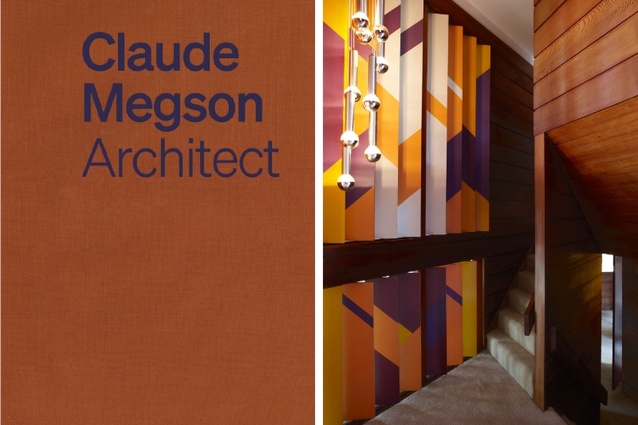
Claude Megson Architect book cover. Giles Reid and Jackie Meiring Massey University Press, 2026 Right: Barr House entry (1972).
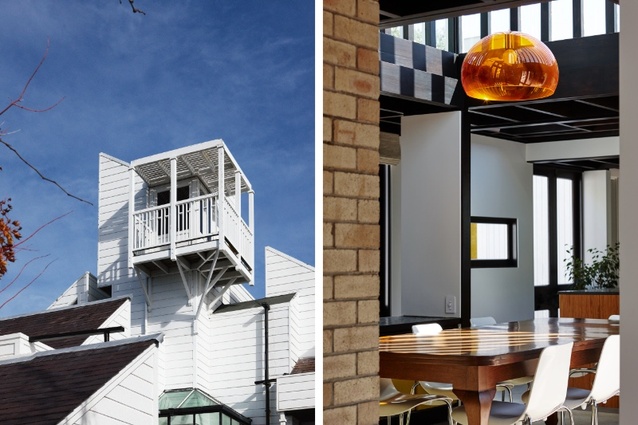
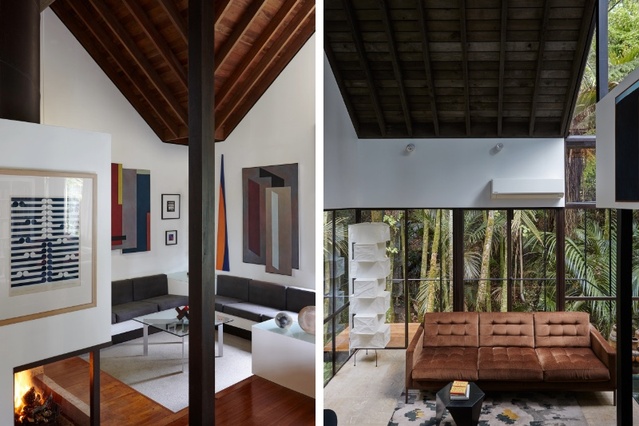
Left: Cocker Townhouse tower (1973–1977). Right: Jopling House dining room (1965).
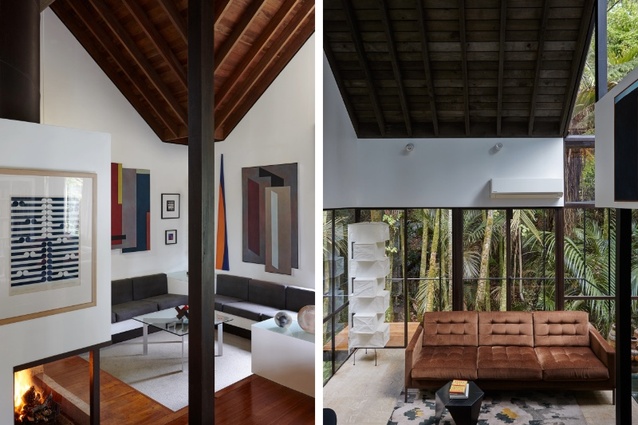
Left: Good House fireplace snug (1969–1970). Right: Phillips House living area (1975–1979).
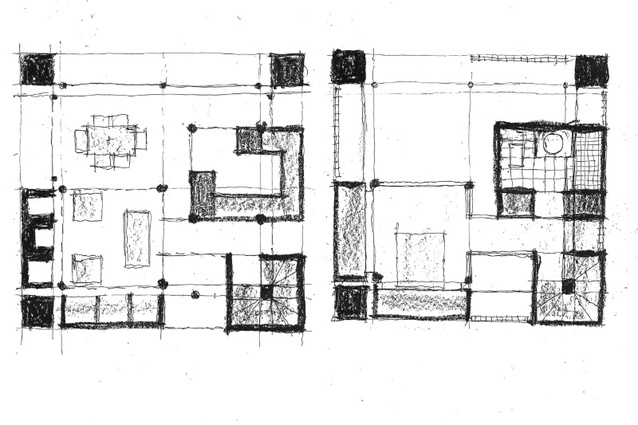
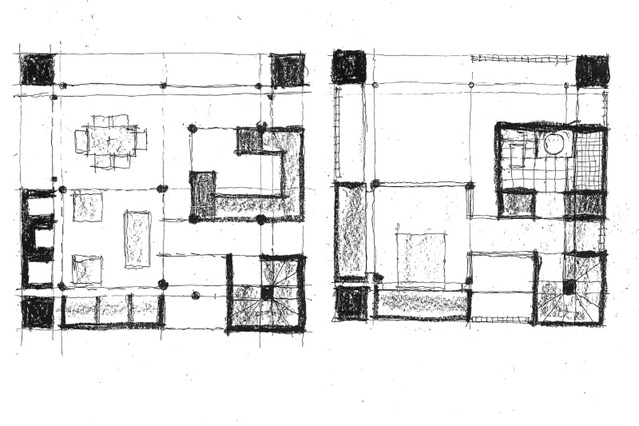
Barr House floor plans, scheme 3 (1992– 1993).
“Houses like a mirror, can reflect people and their way of life. They are most satisfactory when a two-way dialogue exists between people and their homes, their homes realizing and extending their ideas on ideal life.”1 Claude Megson, 1981.
Some decades ago, I made a fateful choice, opting for Claude Megson as design tutor in my second year of study at the University of Auckland School of Architecture and Planning. Across that year, he ran us through variations on house types (a summer bach, an urban courtyard retreat, a suburban home, and a rural country house) all given example by visits to his own residential projects. It was an exceptional introduction to house design: one that left me with a set of design processes and inspirations spanning a career.
Many years later it is a great pleasure to be offered a copy of Giles Reid and Jackie Meiring’s Claude Megson Architect (2026) to review. And a beautiful, richly illustrated volume it is, with a plethora of drawings by Megson, new project photographs by Meiring (as well as historical images) with thoroughly researched and insightful descriptions by Reid. Sat between fabric-faced covers, the book runs to a comprehensive collection of 421 pages. Its subject, Claude Megson (1936 – 1994), while a practitioner and educator of considerable note in Auckland between the 1960s — 1990s, has remained relatively uncelebrated and his work unpublished in any complete sense. Claude Megson Architect sets out to correct both, offering an important addition to the piecemeal accounting of the absorption and transformation of international architectural strands appearing from the 1960s here — diverse strands Peter Shaw has termed ‘architecture as individualism’.2 While Shaw offers only a couple of paragraphs on Megson’s oeuvre in his encyclopaedic A History of New Zealand Architecture,3 Claude Megson Architect provides a far more satisfying career-long account, one building on Reid and Meiring’s earlier collaboration: Claude Megson: Counter Constructions (2016). This latest engagement with Megson’s work catalogues 34 projects; most are completed houses but fascinating unbuilt proposals are included, too, like Megson’s Gibbs House competition entry from the early 1980s, and an entry for the Australian Parliament House competition in 1979 (undertaken with Clinton Bird and then student Lindsay Gillies).
The book is arranged in three sections, with an introduction, a chronological collection of architectural works spanning 1965-1993, and a shorter Further Works section. The introduction by Reid offers biographical and professional facets of Megson’s career, noting his early employment at Gummer and Ford, and his subsequent production of residential projects from 1962 including important innovations in terrace housing. It aligns Megson’s early output with the work of Peter Beaven, John Scott, Ian Athfield, and Roger Walker, parallels that had Megson featuring with them in the New Romantics exhibition at The Dowse Art Gallery in 1972. Though Reid suggests differences with them, too — an eschewing of pop influences for instance and what he sees as Megson’s predilection for modernist continuity over any overt postmodern ‘break’ (a demarcation warranting deeper unravelling, I think).
The introduction also offers a valuable discussion of broader influences, noting the ongoing significance of Frank Lloyd Wright and Aldo van Eyck, and project-specific precedents found in Sea Ranch Condominium One, completed by Moore Lyndon Turnbull Whitaker Architects around 1963, and in Richard Meier’s Smith House (1965 – 1967).
These introductory comments are fleshed out in fascinating detail, project by project, in the Works section, where, by its end, a commentary on Paul Tonks’ unrealised house (1992–1993) serves as a conclusion. Reid’s recognition of parallels with Louis Kahn here is particularly insightful, given his proposition that Megson’s “originality [lay in…] his way of making plans”.4 Finding resonance in the Tonks drawings with Kahn’s planimetric play of solids and voids, Reid recognises Megson’s persistent (if not exclusive) appeal to additive cubic forms but on condition that no “perfect square [remains] intact”.5 The obvious echo here is with Kahn’s own sense of the square as a shadow hanging over architectural beginnings, one the design process is charged with disproving.6
Reid’s commentary on the Tonks House reminded me of Kahn in another way, too. If, as he famously stated, architecture starts with a room as a crucible for conversation, and architecture itself ought to compose a society of rooms,7 this might explain Megson’s own placement of human sociality at the heart of architecture. I recall reading in a Study Paper he wrote in May 1981 that the essential building blocks of architecture ought to be derived from the “world of occasions” where simple, every day events form rituals and “symbolic nodes” capable of making dwelling sensorially and enduringly meaningful. Meiring’s photographs beautifully capture something of this focus on lived occasions in Megson’s work, framing part views of his buildings and interiors more often than panoramic depictions and, while mostly unoccupied, these images suggest occupation is compellingly immanent.
While, in the epigraph I started with, Megson speaks of the potential for architecture to hold a two-way dialogue between home and inhabitant, in Claude Megson Architect is found a mirror of comparable worth, a means of maintaining and multiplying conversations with Claude Megson’s architecture. As such, Reid and Meiring wonderfully remind that Megson continues to motivate occasions for learning.
References
1. C. W. Megson, 1981, ‘The Search for Spatial Meaning that Clarifies and Enriches Human Existence’, Unpublished Study Paper No. 14, University of Auckland, May.
2. Peter Shaw, 1997, A History of New Zealand Architecture. Hodder Moa Beckett.
3. Shaw, A History of New Zealand Architecture, p. 168.
4. Giles Reid & Jackie Meiring, 2026, Claude Megson Architect. Massey University Press, p. 13.
5. Reid & Meiring, Claude Megson Architect, p. 392.
6. See, James Bailey, 1966, ‘Louis Kahn in India – An Old Order at a New Scale’, Architectural Forum, July: 40.
7. See George Marcus, 2009, ‘Louis I. Kahn: The Making of a Room’, Journal of Architectural Education, ACSA: 141–149.
8. Megson, ‘The Search for Spatial Meaning’, Study Paper No. 14.