Book Review: Architecture Against Architecture: A Manifesto

Chris van Duijn of OMA’s design for the Zardun region of NEOM.
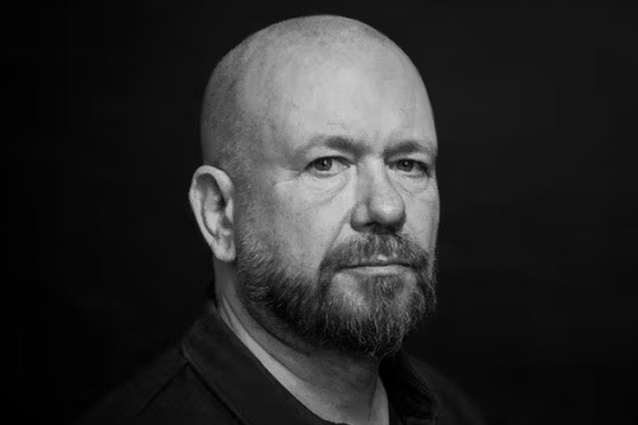
Dutch architect, architectural theorist, urbanist and writer Reinier de Graaf is a partner in the Office for Metropolitan Architecture (OMA).
Patrick Sherwood considers Reinier de Graaf’s latest book about architecture and its attempt to answer the question of “what next?”
“No debunking of myths this time. Architecture Against Architecture is a book about uncomfortable realities.”
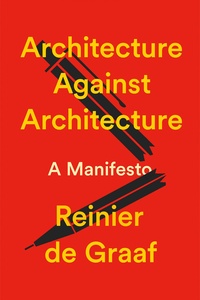
Reinier de Graaf’s latest collection of essays released last month by Verso is his third non-fiction book about architecture.
Where Four Walls and a Roof dealt with practical realities and Architect, Verb addressed the industry’s myths, this time he attempts to answer the question of what next?
But first, De Graaf and the team are presenting the firm’s designs for a new Saudi development in Jeddah. After they’ve explained the contextual courtyards providing passive cooling, the exasperated Egyptian Project Manager leans back in his chair, and says frustratedly “Jeddah…” unable to put quite into words the city’s essence the project aims to achieve. “Jedda’ah! It’s not Jeddah enough,” the client keeps repeating, gyrating his hands. “Where’s the DNA of the place?”
After the meeting, the author spends the evening prompting DALL-E, searching for the essence of what the client really wanted, ultimately unsuccessful but convinced the model could help in some way.
These specifics are what make De Graaf’s writing grounded and compelling. Each essay centres around an anecdote anchoring the topic — from Vitruvius to sustainability — and grouped roughly into two halves titled ‘Architects’ and ‘Architecture’.
Part 1 (perhaps more accurately titled ‘Starchitects’) focuses on individuals. He traces the personal fall of David Adjaye in the wake of sexual impropriety, or the complex Modernist legacy of Oscar Niemeyer, as counter-examples to visionary founder myths: firms not founders, de Graaf says.
Regarding the growing American-style employee relations around the world, he calls out Snøhetta and SHoP’s union-busting efforts and advocates for the AWU as a bastion for decoupling authorship and power from the figurehead.
Part 2 looks at more general conditions shaping the industry. Each essay invokes statistics and exhaustively cited catalogues of trends or ideologies or practices or built examples.
In ‘Faux Arts’, he decisively separates art and architecture with his gift for aphorisms: “Art is haunted by a freedom it can never conquer, architecture by one it can never achieve.”
Or on the separation of academia and industry: “Increasingly, the intellectual climate at architecture schools feels like a self-imposed theatre of the absurd.”
Yet, as coherent and well-cited as each essay is, I question the value of conclusions the book’s audience will, in all likelihood, already agree with. What architect wouldn’t already take climate change seriously and understand reuse as the most sustainable practice? De Graaf really is preaching to the choir. Preaching problems, not solutions.
For example, the only radical thesis in his essay about semi-permanent vacancies in luxury developments as a vehicle for property investment is where de Graaf argues architects should withhold their labour from developers’ speculative projects “until the conditions have fundamentally changed.”
Suggesting the book’s target audience stop what might be their means of survival for a vague promise of change is not enough. To get us on board requires heft in examining likely outcomes, and, more importantly, implementation. It’s the outcomes — “what comes next” — that require lengthy unpacking.
In fact, he completely undercuts his own argument later saying: “I’m under no illusions. If architects decided to stop designing new buildings tomorrow, the world would surely not stop building them.” Hmm.
The other missing context is the wider world. Consistently de Graaf has talked of architecture’s impotence and lack of credibility. And, yet, he myopically focuses on the internal power struggles and myths he has already spent two books debunking.
Visionary founder myths are not exclusive to starchitects, they exist as a marketing strategy in all sorts of industries. Or the worldwide wave of unionisation and employee ownership in the last decade are late arrivals to architecture.
Despite stressing architecture’s dependence on upstream power, he spends little time addressing the wider economic, cultural and political forces all industries are affected by.
As a piece of late-capitalist zeitgeist, Architecture Against Architecture is effective in laying out the unenviable position the architectural practice finds itself in: one of double binds and moral compromise, and one without real power.
But, as a manifesto, De Graaf’s vision is uncompelling. The conclusion repeats idealistic slogans like the most ambitious manifestos do. But it doesn’t share their same optimism, the same alternate futures — however fanciful — that at least made them powerful possibilities for change.
Architecture Against Architecture is not uniquely guilty in its lack of vision. This is a symptom of our “long slow cancellisation of the future” that Fisher described. Where manifestos were once utopian, where culture once faced forward, we now look back, now see dystopia. Perhaps OMA’s-own Koolhaas’ journey from Delirious New York (1978) to Junkspace (2001) is most illustrative of this cultural shift.
De Graaf has always been practical and cynical and a little sardonic. This makes his mild positive turn here rather… bland.
His conclusions like: “End the focus on figureheads; welcome labour unions; collectivize practice; retire at sixty-seven; abolish authorship…,” are worthy causes, yet feel more like orders to shift around the facade patterning whilst larger, more structural, forces slowly make our industry less-and-less impactful.
To focus on process at this powerless moment is the defining trait of the current establishment. All while forgoing strategy towards actually achieving those means.
Instead of calling it a manifesto, de Graaf, nearly at the end of a stellar career, perhaps should have framed it as ‘wisdom’ or ‘solutions’ or ‘thoughts’. Or perhaps as a manifesto for a different time of life.
Rather, in my incorrigible youth, I’m drawn more towards the mid-century avant-garde like Archigram or Superstudio, who shared a genuine commitment to searching for something better. As Warren Chalk said, “We are in pursuits of an idea, a new vernacular, something to stand alongside the space capsules, computers and throw-away packages of an atomic/ electronic age.”
Now, in the information age (or perhaps the mis-information one), what is that new vernacular? What comes next?
This book won’t do enough to answer the audience members at his next conference asking yet again for a viable vision of the future. Not how next, Reinier. What next? What next indeed.
Architecture Against Architecture: A Manifesto by Reinier de Graaf is published by Verso Books.